
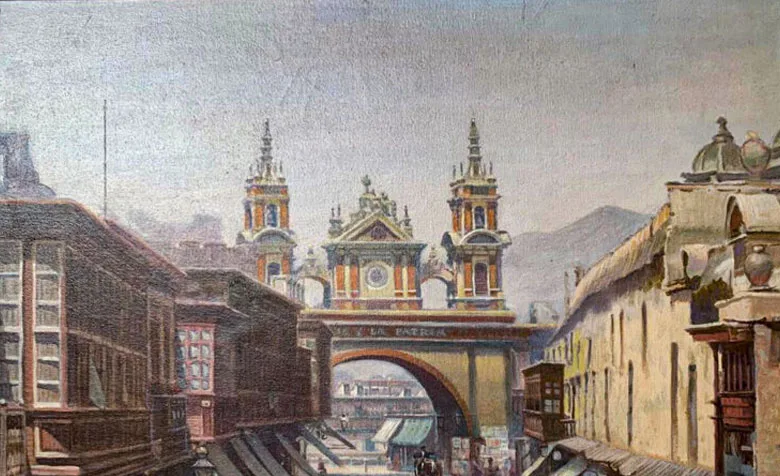
It was one of the most emblematic entrances to colonial Lima, built in 1700 next to the Stone Bridge and dedicated to King Philip V.
Table of Contents
The Monumental Gateway of Colonial Lima
Centuries ago, in the heart of the Historic Center, stood one of the most emblematic entrances to colonial Lima: the Arch of the Bridge. This imposing structure marked the entry into the city across the Stone Bridge, becoming a symbol of power, prestige, and tradition. Today, its history is being brought back to life thanks to archaeological discoveries and recovery projects seeking to restore its prominence.
History of the Arch of the Bridge
- Construction in 1700: The arch was erected as a monumental Baroque-style gateway, dedicated to King Philip V of Spain.
- Main Function: It served as the official entrance to the city, through which viceroys, authorities, and merchants arriving from the north bank of the Rímac River would enter.
- Materials: It was built mainly from oak wood, with ornamental details that reflected the wealth of the era.
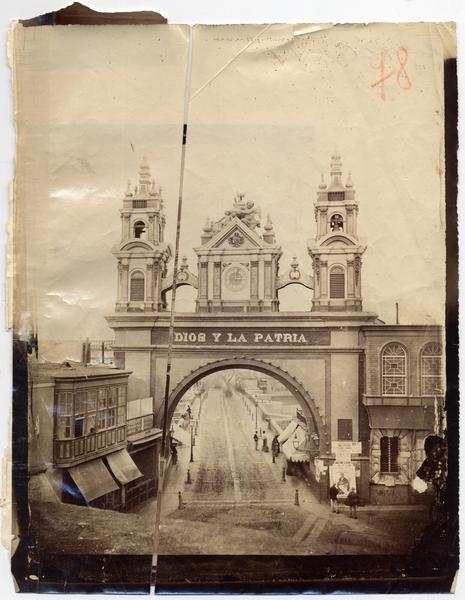
Decline and Disappearance
The earthquake of 1746 severely damaged the structure, and later, in 1879, the arch was set on fire during the War of the Pacific. From that point on, it vanished from the Lima landscape, surviving only in historical memory and old engravings.
Rediscovery and Future
In recent years, archaeologists from Prolima found remains of the Arch of the Bridge near the Government Palace. This discovery opened up the possibility of reconstructing the monument, integrating it into the recovery projects for Lima’s Historic Center.
The initiative seeks to rescue a lost symbol and strengthen the city’s cultural identity.
Cultural and Tourist Importance
The Arch of the Bridge was not only an architectural work but also a symbol of colonial Lima. Its recovery would make it possible to:
- Revalue the historical heritage.
- Boost cultural tourism in the Historic Center.
- Offer residents and visitors a new meeting point and a place of memory.

The Arch of the Bridge is more than just a memory; it is an opportunity to reconnect with history and project Lima as a city that honors its past while building its future. Today, it is in the process of being recovered thanks to recent archaeological findings.