
Table of Contents
The Lord of Miracles is the deepest expression of Lima’s faith, tradition, and identity. Every October and early November, the Peruvian capital comes to a standstill to honor the Purple Christ in a celebration that combines devotion, history, and community.
At VamosALima, we’ve compiled the definitive guide to the Lord of Miracles processions in 2026, with exact dates, times, routes, and practical tips so you can live this unforgettable experience—whether you’re a devotee, a tourist, or simply curious about Peruvian culture.
Who is the Lord of Miracles? The story behind the Purple
Origin and meaning
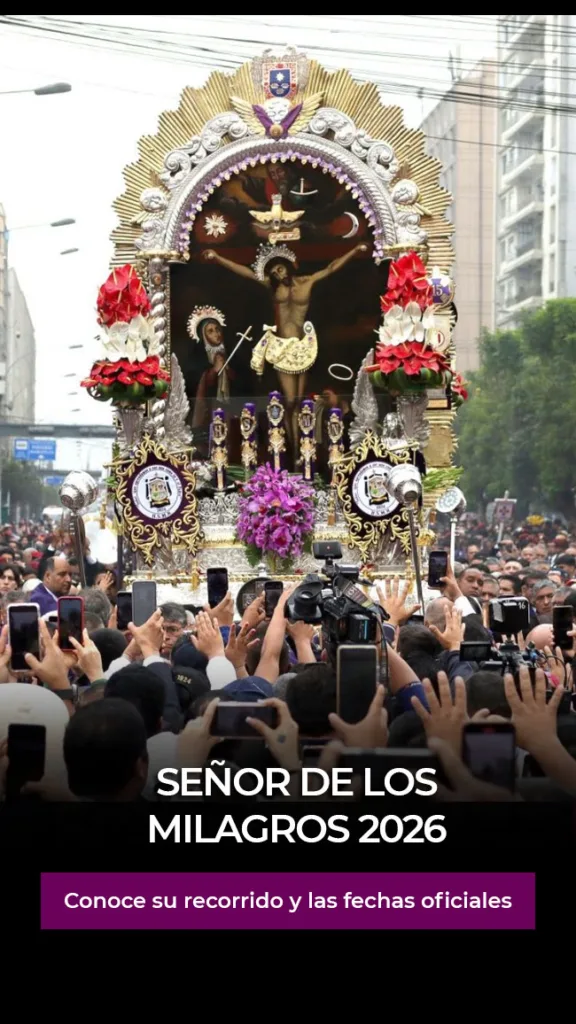
The Lord of Miracles is an image of Jesus Christ crucified, painted in the 17th century by an Angolan slave on the walls of the Nazarenas convent in downtown Lima. This painting has witnessed earthquakes, wars, and political changes, yet has remained miraculously intact for more than 350 years.
Why is it so important in Peru?
- Symbol of faith: It represents the unshakeable faith of the Peruvian people.
- Cultural heritage: It is the most venerated religious image in Peru.
- Lima identity: The Lord of Miracles is “limeño” par excellence.
- Documented miracles: There are testimonies of healings and protections attributed to his intercession.
- National unity: It transcends social classes, ethnicities, and regions; all Peruvians honor him.
The Color Purple: A Symbol of Penance and Hope
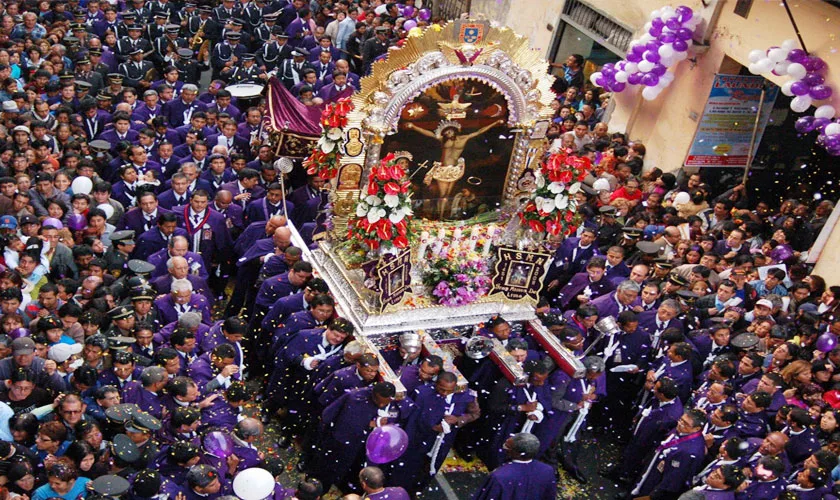
Purple is the liturgical color of penance and hope. During the processions, thousands of devotees dress in purple, creating a sea of faith that moves through the streets of Lima.
Official Dates of the 2026 Processions
The Lord of Miracles processions in 2026 will take place on five strategic dates:
First Procession: Satruday, October 3
First official outing. It begins at noon from the Sanctuary of Las Nazarenas, traveling along Tacna and Emancipación avenues, jirón Chancay, and Conde de Superunda, then returning to the sanctuary between 7:00 p.m. and 8:00 p.m.
- Departure time: 11:00 AM (very early to avoid the heat)
- Estimated duration: 8–10 hours
- Starting point: Church of Las Nazarenas (Jr. Huancavelica 1031, Cercado de Lima) View map.
- Significance: Marks the official start of the Lord of Miracles season

Second Procession: Sunday, October 18
The procession begins at 6:00 a.m. It will travel along jirón de la Unión and the Plaza de Armas (where it will receive official honors), continue past Congress, jirón Huanta, and end its route at the Church of El Carmen in Lima, with arrival estimated between 1:00 a.m. and 2:00 a.m.
- Departure time: 6:00 AM
- Estimated duration: 8–10 hours
- Starting point: Church of Las Nazarenas. View map.
- Note: A workday, but many request time off to attend

Third Procession: Monday, October 19
Considered one of the longest routes. It begins at 6:00 a.m., visiting institutions such as Hospital Dos de Mayo and Hospital Almenara, passing by the Palace of Justice, and returning to the Church of Las Nazarenas, with arrival expected between 3:00 a.m. and 4:00 a.m.
- Departure time: 6:00 AM
- Estimated duration: 8–10 hours
- Starting point: Church of El Carmen. View map.
- Significance: A long weekend, awaited by many devotees

Fourth Procession: Wednesday, October 28
The central day. The image will set out at 6:00 a.m., traveling through areas such as Hospital Arzobispo Loayza and districts like Breña. The return to the Sanctuary is expected in the early hours of the following day, between 3:00 a.m. and 4:00 a.m.
- Departure time: 6:00 AM
- Estimated duration: 8–10 hours
- Starting point: Church of Las Nazarenas
- Note: The second Sunday procession, also very crowded

Fifth Procession: Sunday, November 1 (All Saints’ Day)
This will be the shortest route. It will set out at noon and travel along jirones Callao and Chancay, as well as Emancipación avenue, returning to the monastery at approximately 6:00 p.m.
- Departure time: 11:30 AM
- Estimated duration: 8–10 hours
- Starting point: Church of Las Nazarenas
- Significance: The final and most emotional procession of the year, coinciding with Day of the Dead

Tip: If it’s your first time, we recommend attending the procession on October 28, or November 1, since there’s more devotion and a festive atmosphere.
A spectacle of faith and tradition
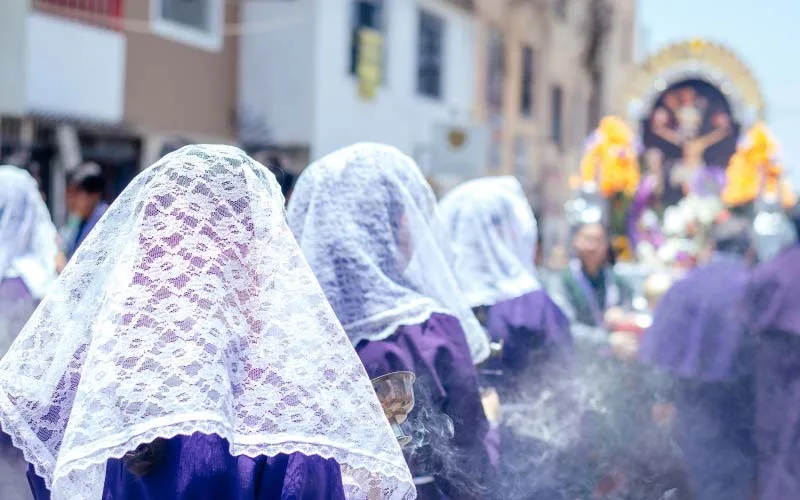
Participating in the procession is a multisensory experience. The air is filled with the aroma of incense, hymns and prayers resonate in the streets, and the sea of people dressed in the traditional purple habit creates an unforgettable sight. It’s the perfect opportunity to see the sahumadoras (women who burn incense) and the hermanos cargadores (carrying brothers) in action, and to immerse yourself in the deep devotion of the Peruvian people.
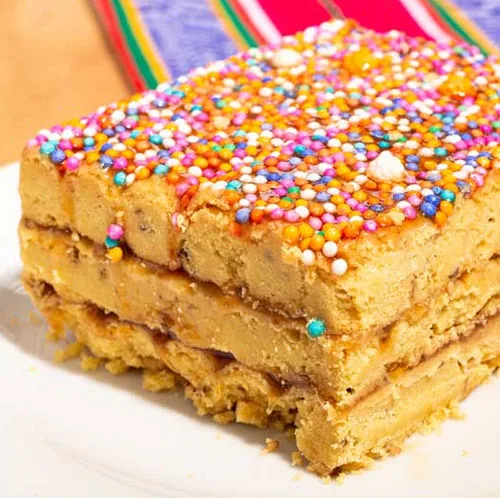
Don’t forget to try the traditional Turrón de Doña Pepa, the emblematic dessert of this festivity, which is sold on every street corner throughout the entire month.
Tips for your visit
- Plan your arrival: The streets of downtown Lima are closed to traffic during the processions. Use the Metropolitano bus system or plan your route on foot in advance.
- Dress respectfully: Opt for comfortable clothing, preferably the purple habit, and suitable footwear for long walks.
- Watch your belongings: Stay alert in large crowds.
- Be patient: The procession’s movement is slow due to the large number of people.
Advance Preparation
Recommended Clothing:
- Purple: If you wish to participate as a devotee (optional but traditional).
- Comfortable: Comfortable shoes (you’ll walk 6–7 km or stand for 8–10 hours).
- Light: October in Lima is spring, with warm days.
- Sun protection: Hat, sunglasses, SPF 50+ sunscreen.
What to Bring:
- Water (at least 1.5 liters per person).
- Light snacks (fruit, energy bars).
- Cash (for meals, taxis, emergencies).
- Charged phone (for photos, emergency contacts).
- Personal medications (if needed).
- Tissues or wipes (for sweat).
Documentation:
- DNI or passport (in case you need to identify yourself).
- Health insurance card (if you have one).
Where to Position Yourself to Watch the Lord of Miracles Procession
Best Locations:
- Plaza Mayor: Central point, but extremely crowded.
- Jr. Carabaya: Historic area, less crowded than the Plaza.
- Jr. Ancash: Good vantage point, with nearby café options.
- Av. Abancay: Spacious, with shade in some areas.
Locations to Avoid:
- Closed corners with no clear visibility.
- Areas with vehicle traffic (although restricted, there are exceptions).
- Places without basic services (restrooms, water).
Key Times:
- 4:00–5:00 AM: Arrive if you want a front spot (very early).
- 5:00–6:00 AM: Recommended arrival for a good spot without extremes.
- 6:00 AM: Official regular departure of the procession.
- 12:00–2:00 PM: Peak heat, consider moving to a shaded area.
- 2:00–4:00 PM: Return of the procession to the Church of Las Nazarenas.
Safety and Care:
- Keep your belongings secure: Avoid large backpacks; use crossbody bags.
- Constant hydration: Drink water even if you’re not thirsty.
- Breaks: If you feel fatigued, sit on a bench or find shade.
- Never separate from your group: If you go as a family, set a meeting point.
- Respect the order: Don’t cross the procession route without permission.
Important Information: Changes and Updates for 2026
- Routes may vary: Although the official route is the one mentioned, check with the Archbishopric of Lima days in advance for possible changes.
- Security measures: There will be a police and municipal security presence. Respect the instructions.
- Emergency services: Red Cross, ambulances, and medical posts will be available at strategic points.
- Live broadcast: For those who can’t attend in person, the Brotherhood of the Lord of Miracles of Nazarenas will enable live streaming of the route through its official channel, “Canal HN.”
The Lord of Miracles procession 2026 is an event that will let you connect with the spiritual heart of Lima. It’s a living testimony of a faith that has endured through the centuries and a cultural spectacle that no visitor should miss.
Ready to dress yourself in purple?
Plan your visit to the Lord of Miracles processions.
Be part of the faith that moves a nation.
Frequently Asked Questions (FAQ)
-
Which procession is best to attend if it’s my first time?
The processions on October 28, or November 1 are ideal for first-timers. There’s a more festive atmosphere, better service availability, and it’s the weekend (less work pressure).
-
Do I need to be religious to attend?
No. Although it’s a religious celebration, it’s also a cultural event open to everyone. Many attend for the experience, the history, or simply out of curiosity.
-
Should I dress in purple?
It’s not mandatory, but it is traditional. If you want to fully participate in the experience, dress in purple. If you prefer to observe, you can wear regular clothing.
-
How long does the procession last?
The full procession lasts 8–10 hours, from 6:00 AM to 2:00–4:00 PM. You don’t need to stay the whole time; you can arrive at any point and watch part of the event.
-
Are there public restrooms during the procession?
Yes, there are public restrooms in the Plaza Mayor and in some nearby businesses. Bring cash (S/1 to S/2) to use them.
-
Can I bring children?
Yes, but with precautions. Bring water, snacks, sunscreen, and consider alternatives if the heat is intense. Many families attend with children.
-
Is downtown Lima safe during the processions?
Yes, there’s an increased police presence. However, as with any mass event, keep an eye on your belongings and avoid dark areas after nightfall.
-
Are there additional events during the festivities?
Yes, there are special masses, religious concerts, and cultural activities in churches and public spaces. Check the official schedule.